
You have prepared a CV. You have personalised it to the job description, but now you are thinking, “do you need a cover letter in 2026?” or not.
It’s a fair question. The job market is highly competitive. AI tools, one-click applications, and other portals have taken over. So, does it still matter, or no one reads it?
The data tells a clear story, and it might surprise you.
Key Takeaways
- A cover letter is still important for many of the job postings.
- 83% of hiring managers say they frequently or always read cover letters.
- A strong cover letter can convince a hiring manager to interview a weaker candidate on paper.
- Even when it’s optional, submitting a cover letter sets you apart in the job search.
- A generic cover letter can hurt more than help; always customise it for the role.
Why Do You Need a Cover Letter for a CV in 2026?
The direct answer to this question is: because hiring managers read them and they assess candidates on them.
According to data from Harvard Business Review, 83% of hiring managers say they frequently or always read cover letters. Even among companies that don’t require one, 73% of managers still read them when submitted.
That’s not a small number. That’s almost every hiring manager you’ll encounter in your job search.
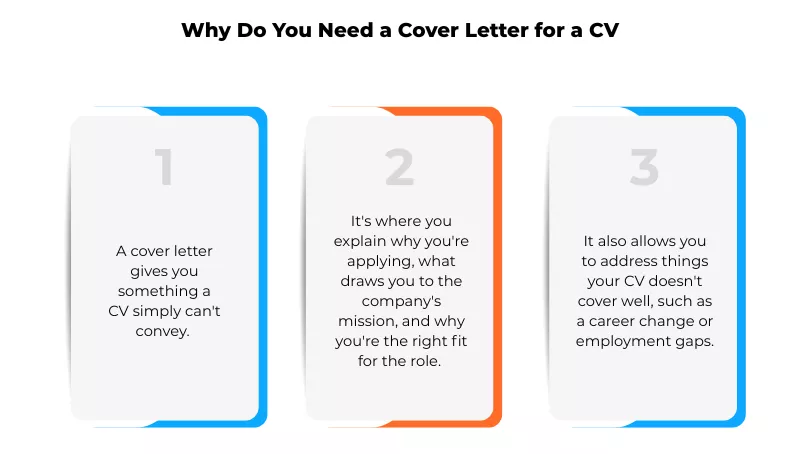
Your CV is the “what,” and your cover letter is the “why.” Taking a professional career help provides the what and why accurately.
What the Numbers Say about Cover Letters?
The data from recent hiring manager surveys makes a strong case for always submitting a cover letter as part of the job application process:
- 49% of hiring managers said a cover letter serves as the deciding factor among candidates.
- 33% said a weak cover letter with bad grammar could hurt a strong candidate.
- 89% of recruiters expect candidates to submit tailored cover letters for specific roles
- 81% of recruiters report rejecting candidates based solely on their cover letters
- 57% of recruiters prefer that applicants use the cover letter to explain employment gaps
So, when you ask, do you always need a cover letter? These numbers make one thing clear: a cover letter is necessary. It can open doors or close them before you’ve had a chance to make your case.
Does a Cover Letter Still Matter if It's Optional?
Yes. When it is not compulsory, job seekers ignore it. But that’s where your opportunity lies.
Submitting one when it is not required shows your keen interest in the role. It shows you are willing to go the extra mile. This is exactly what employers want to see in a potential employee.
Here are the four scenarios you’ll likely face in the online application process:
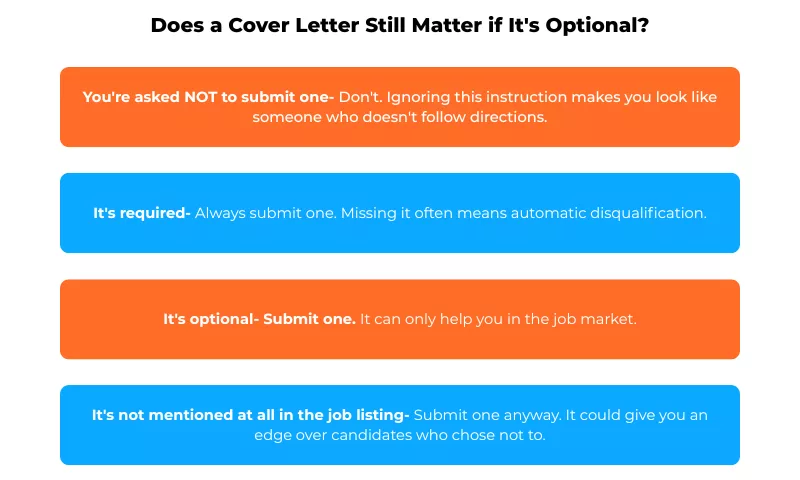
The rule of thumb is simple: when in doubt, write one.
When a Cover Letter Can Actually Hurt You
A cover letter can help, but a bad one can do real damage. Here’s when you’re better off without one:
- You have written it in a rush, and there are spelling errors.
- You have sent a generic cover letter to every company.
- The employer has specifically asked you not to include one.
- There’s no option to add one in the online application.
Poor communication skills in a cover letter give a bad impression. If you do not have the time to write a well-crafted one, it is better not to submit it.
How to Write a Cover Letter That Hiring Managers Actually Read
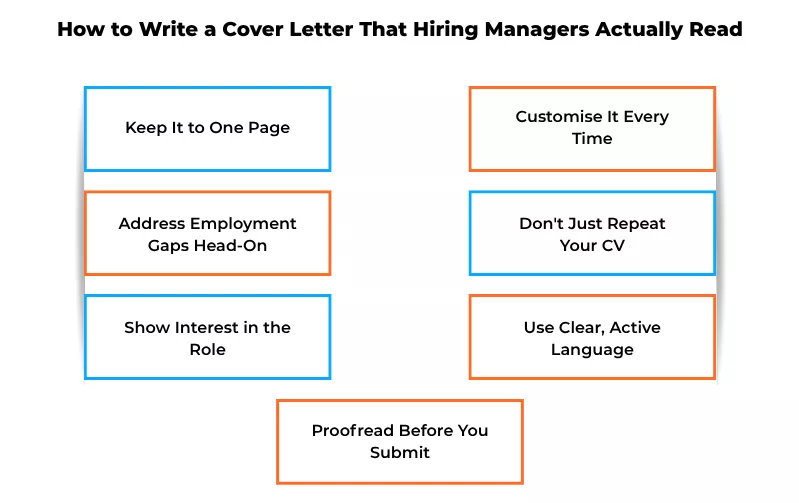
A well-written cover letter doesn’t need to be long. It needs to be relevant. Here’s how to write one that works:
Keep It to One Page
Hiring managers don’t read cover letters that feel like an essay. Just stick to one page with 3-4 short paragraphs. Include necessary skills and why you want to join and stop.
Customise It Every Time
Do not send a generic cover letter everywhere. You must prepare a brand-new cover letter for each application that caters to the company’s mission and vision of the company.
Address Employment Gaps Head-On
If you have employment gaps on your CV, use the cover letter to address them. An expert CV writing service can also solve your issues with gaps in your CV. Recruiters prefer this over finding out in the job interview. A brief, confident explanation shows self-awareness and professionalism.
Don’t Just Repeat Your CV
Your CV already has your qualifications listed in it. The cover letter should be direct and show your genuine interest in the role you’re applying to. That overlap trips up a lot of applicants — Cover Letter vs Personal Statement sets out which document does which job.
Show Interest in the Role
Research about the company and mention the best and unique thing about it in the letter. You can talk about the recent project, a value they stand by, or something that excites you about their company. It shows you’ve done your research.
Use Clear, Active Language
Write like a professional, not like a robot. Avoid overused phrases like “I am writing to express my interest.” Start strong. Make the hiring manager want to read the next line to boost your chances for your dream job.
Proofread Before You Submit
Before you look for how to end a cover letter, knowing this seems obvious. But it’s one of the most common mistakes job seekers make. Spelling mistakes and grammatical errors signal a lack of attention to detail. Read it out loud, or use a free tool like Grammarly before you hit send.
Cover Letters and Career Changes
If you’re making a career change, a cover letter is not just necessary; it’s essential.
Your CV might not tell the whole story. You may be moving from one industry to another, or applying for a role that doesn’t perfectly match your work history on paper. The best cover letter writing service is where you connect the dots.
Explain your skills, your motivation for the career change, and why you’re a strong fit for this role. Without this context, a recruiter may move on without a second look.
Cover Letters for Entry-Level Jobs in the UK
First time job cover letters are even more important. It is your chance to show your genuine interest and real understanding in the job market. They want to see professionalism and attention to detail in the candidate they are going to hire.
Don’t skip it. Use it as they are still necessary to provide value to your application.
Is a Cover Letter Necessary for Every Job?
Not always. There are situations where skipping one makes sense:
- Temporary, hourly, or casual work where the employer hasn’t asked for one
- Applications with no field to submit to
- Roles where the employer has explicitly said not to include one
For permanent positions, professional roles, or any job you genuinely want, always include one. It’s part of the job application process that still separates strong candidates from average ones.
Final Thought
In 2026, a compelling cover letter is still important. It’s still read by the hiring managers and gives you the chance in a new role. It still has the power to set you apart or hold you back. The study conducted by Harvard Business School says it all.
The job market is highly competitive. Hiring managers are busy. A well-written cover letter that shows your seriousness for the job listing is the need of the hour. It makes you worth interviewing.
Write it. Customise it. Send it.
Frequently Asked Questions
Do employers actually read cover letters?
Yes. Research suggests that 83% hiring managers read cover letters. At some companies, it is the first document to be read. So personalise your application accordingly.
What percentage of UK hiring managers want a cover letter?
89% of the recruiters want candidates to submit a cover letter as part of the job application.
Is it okay to apply without a cover letter?
It depends on which role you have applied for. If you applied for a temporary one, then skipping it is fine. But if it is a professional role, submit a cover letter, even if it is optional.
What should a cover letter include?
A strong cover letter should have a reason to apply and points that make you a good fit for the role. It should also have the skills that match your job description.
Do cover letters matter for entry-level jobs in the UK?
Yes. It matters as the experience is limited. In such cases, a cover letter is often the deciding factor in securing an interview.
Can a cover letter hurt your application?
Yes, if it is not good, then it can reduce your chances of selection. Always make a new cover letter for each job application.
How long should a cover letter be?
One page is enough. Include short paragraphs to make it easy to read for the recruiter. Recruiters don’t read long essays.
How useful was this post?
Click on a star to rate it!
Average rating / 5. Vote count:
No votes so far! Be the first to rate this post.
We are sorry that this post was not useful for you!
Let us improve this post!
Tell us how we can improve this post?

Want To See My Profile — Click Here Jamie
- How to Write a Resignation Letter: Tips, Templates, and Dos and Don’ts - April 21, 2026
- Do You Need a Cover Letter in 2026? UK Data Reveals the Truth - April 11, 2026
- How to Write a Personal Statement for Board Position? - April 3, 2026
