
The standard UK CV Format should be a two-page, reverse-chronological document that will market your skills to British employers effectively. It must have a professional layout and must focus on clarity and quantifiable achievements.
Knowing the right structure is important for initial screenings, whether you’re new out of college or a seasoned executive. Ladders’ eye-tracking study found UK recruiter spends under 7.4 seconds looking through an application. A well-structured CV will make your most relevant skills and experiences come into view.
Check out this guide to learn about key sections and formatting standards to get your next job in the competitive British market.
Key Takeaways on UK CV Format
- UK CV format generally has 5 core elements, and it is different from a US resume in layout.
- Due to UK GDPR protocols and anti-discrimination law, including the mention of certain details and personal photos, is prohibited.
- UK CV format often differs based on various career stages.
- Professional CV writing and CV editing services like iCover can help job seekers to format their CV according to UK standards and avoid mistakes.
What Is the UK CV Format?
What Is the Standard UK CV Format? (A Quick Glance)
The standard CV format UK has the following core elements:| Section | Core Elements |
| Contact Details |
|
| Personal Profile | A 3–5 line summary of your
|
| Work Experience | Reverse chronological CV format UK list (most recent first), including
|
| Education | Reverse-chronological list of
|
| Core Skills | A targeted list of technical and transferable skills specifically relevant to the job description. |
| References | State as ‘available on request’ |
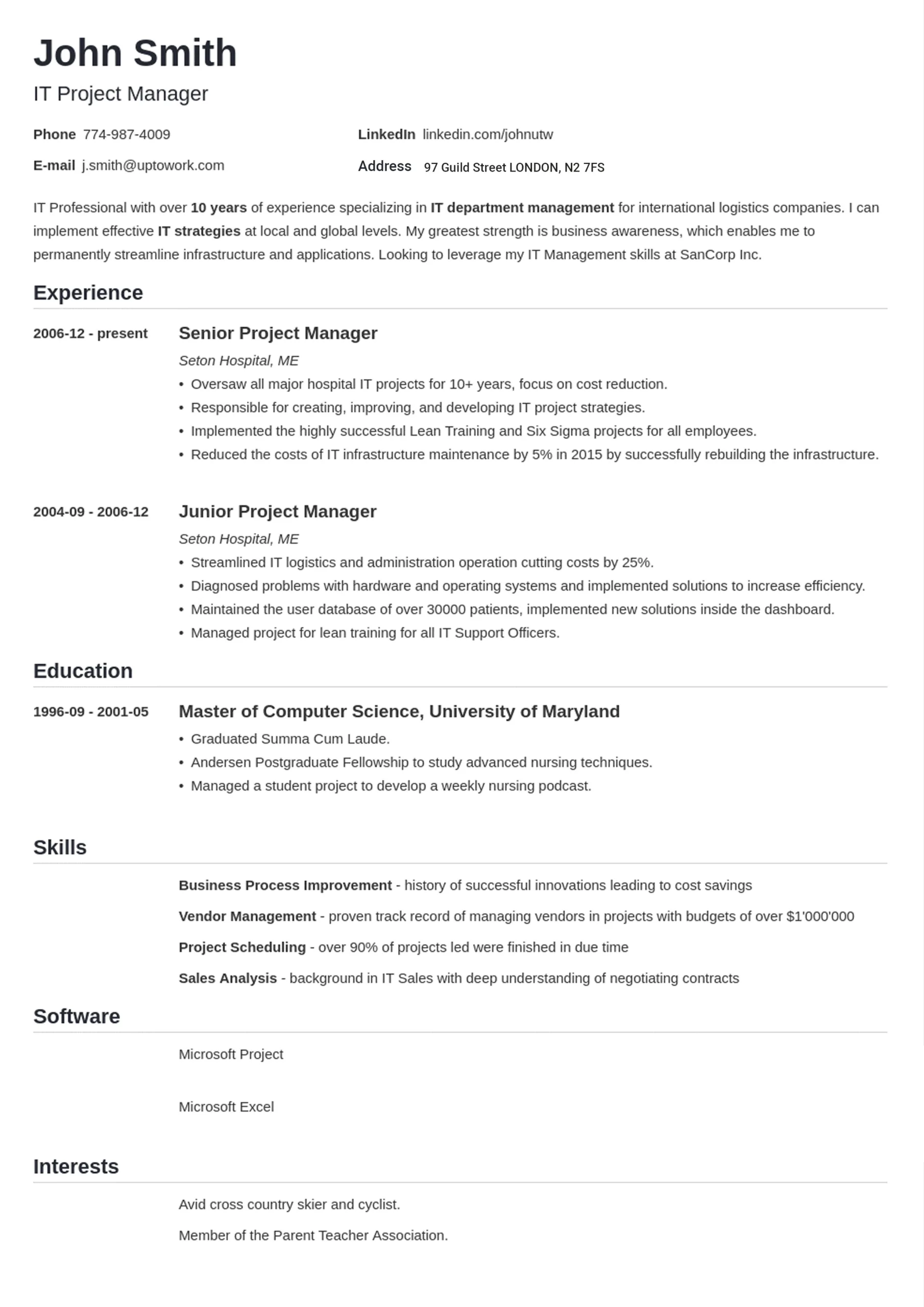
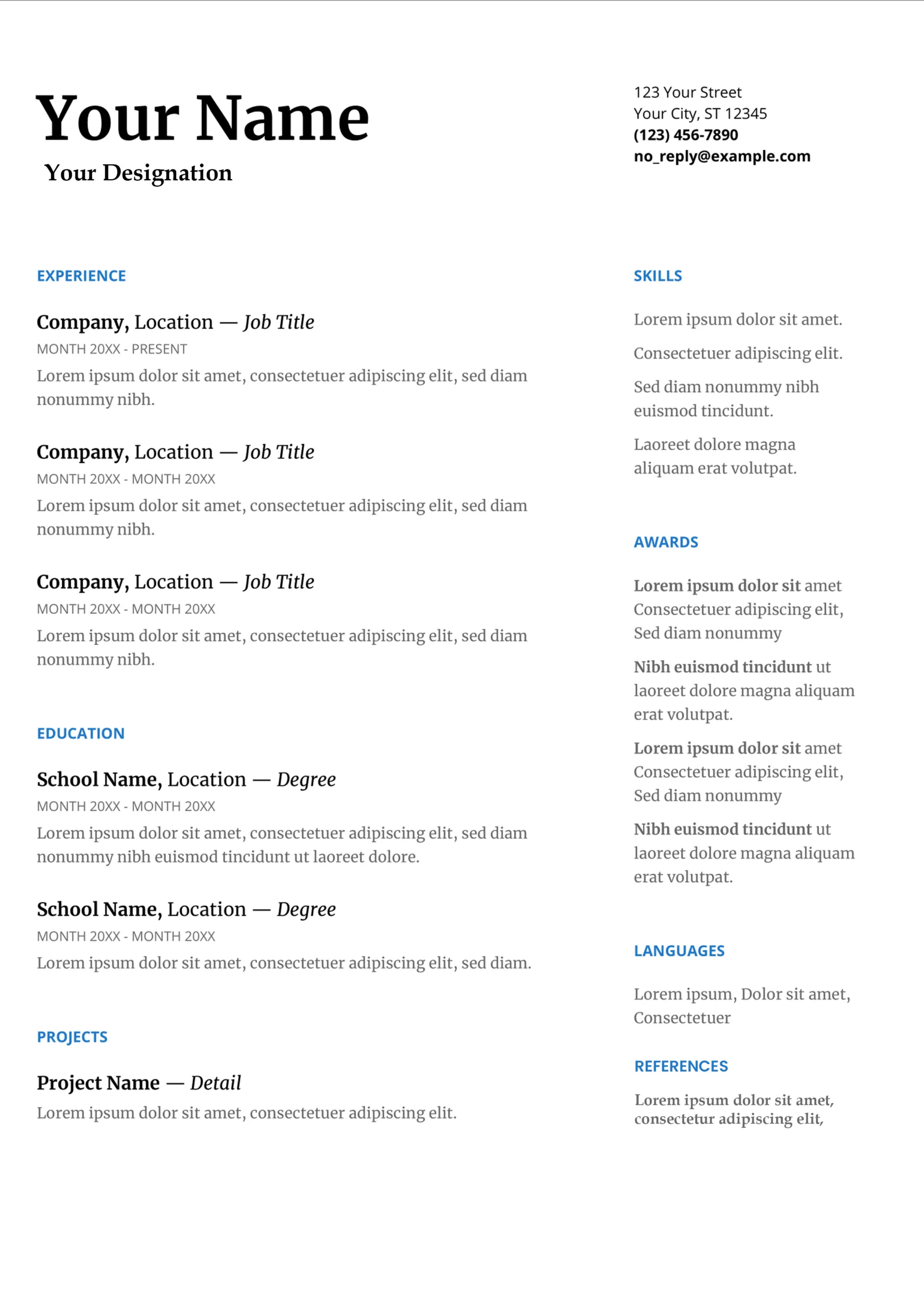
UK CV Format Example with a Sample
Here’s a UK CV layout example with a sample:
How to Write a CV in UK Format? A Step-by-Step Guide with Examples
Now that you already know what sections should a UK CV include, let’s understand how to write each element properly. This guide breaks down the essential steps to perfecting your European CV format UK, ensuring each section meets the expectations of British recruiters.
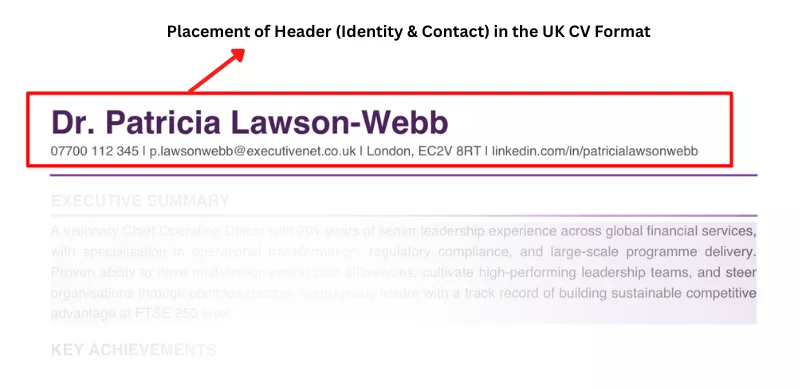
Phase 1: The Header (Identity & Contact)
The header should be neat and strictly business-like. Let’s look at what to add:
- Full name (as main header)
- Mobile number
- Professional email address
- City and County/Region
- LinkedIn profile link.
Example:
What should you not include in a UK CV?
The UK has strict anti-discrimination and data protection laws (GDPR), which govern the recruitment process, ensuring a fair process for shortlisting. For this reason, you should avoid including personal information such as:
- Age, date of birth
- Gender
- Marital status
- Religion
- Full Home Address
- Profile photos on CV
Phase 2: The Introduction (The Hook)
Your personal statement is a concise description of yourself. To be effective, you must tailor your CV specifically to the job you’re applying for by highlighting relevant expertise.
If you’d like inspiration, browsing some CV Summary Examples can help you see how this is done effectively.
How do I write a personal statement for a UK CV?
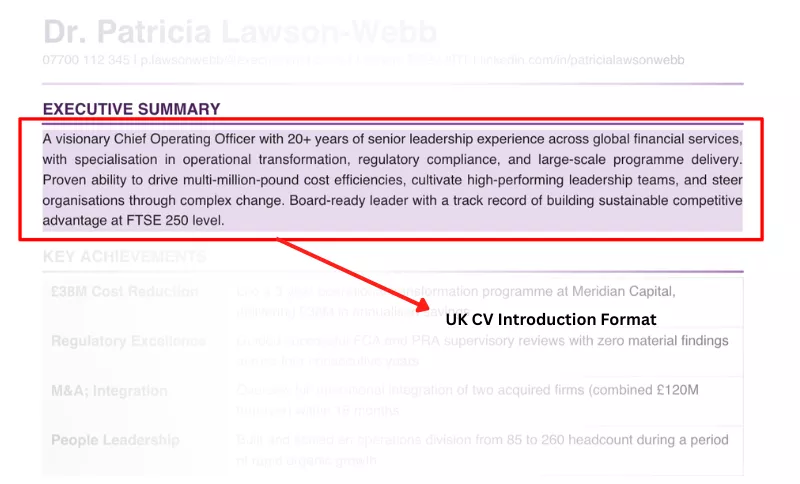
Try to write 3-5 lines and make it easy to read. State the job title, experience, highlight an accomplishment, and explain how you will contribute to the new organisation.
Here’s an Example of a UK CV Format with Personal Statement:
Phase 3: The Professional Core (Work History, Experience & Skills)
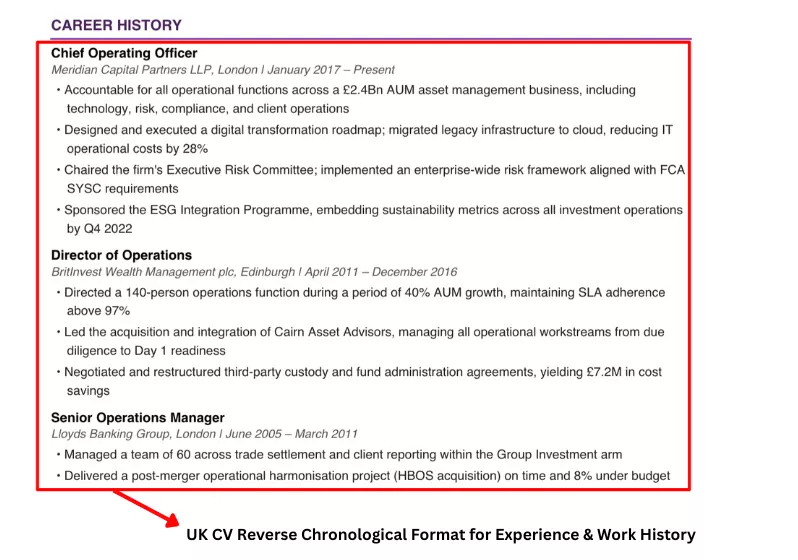
The CV structure UK follows reverse-chronological order and a clear work history. This proves you have the practical skills and experience required for the role. You must follow the employment experience CV format to show your practical skills and experience.
- Writing format: Begin with your current or most recent position. List achievements in bullet points for easy scanning.
- Skills Section: Include a dedicated section of skills for CV, including technical tool proficiency and soft skills.
Example:
Phase 4: Academic Background (Education)
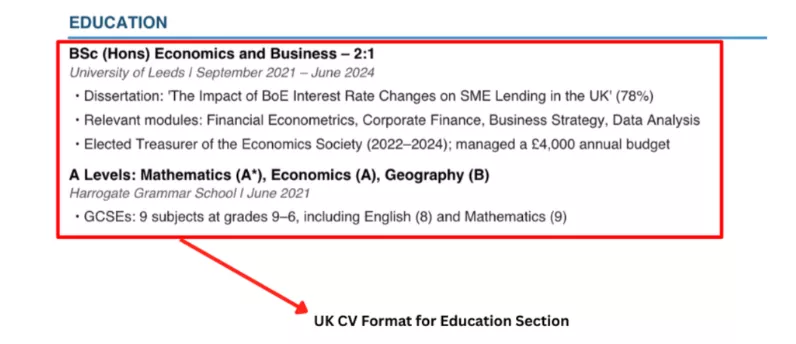
The CV layout UK requires your education to be listed in reverse-chronological order. Brevity is advised for those who are experienced.
- How to write: List your most recent qualification first, followed by previous studies. Add the name of the institution, degree name, and dates. List your most recent qualification first, followed by previous studies. If you completed vocational higher education, knowing how to write a foundation degree on a CV (such as an FdA or FdSc) alongside the institution name and dates ensures your academic section remains accurate and professional.
Example:
Phase 5: Closing & Supplementary Info
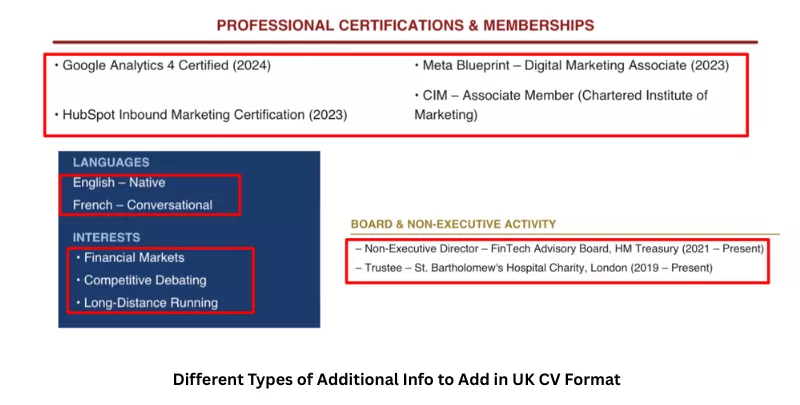
An additional section is often added to a UK CV to give a more complete description of your candidacy. This is common in a CV format for UK jobs to show professional development.
Optional Sections to Include
- List certifications
- professional memberships
- Languages
Example:
Should I include references on my UK CV?
In CV England standards, you do not need to list names. Simply state they are available if requested.
Example:
References: Available on request.
If you need to master the best British CV format, consider taking iCover’s professional CV writing services to get expert assistance!
What Are The UK CV Layout Rules?
In addition to the content itself, the presentation of a United Kingdom CV format is what makes the difference between a recruiter reading it or not. By following certain layout guidelines, you can make your document easy to read and professional.
How Long Should a UK CV Be?
The latest CV format UK typically occupies two A4 pages. This will allow you to provide enough information about your career without overwhelming the reader.
So, how many pages should a CV be?
- Entry-level/Graduate CV: 1 page (approx. 400–500 words).
- Standard Professional CV: 2 pages (approx. 800–1,000 words).
- Academic or Medical CV: Academic CVs in the UK can run 10+ pages for senior researchers (publications, grants, conferences).
Don’t reduce the font size to fit the page. The expected standard is two pages if you have more than 10 years of experience.
What Is the Best Font for a UK CV?
For a professional CV format UK use a clean font and avoid using fancy fonts. British employers like modern font styles that are legible on a computer display and will work with an Applicant Tracking System (ATS).
- Standard Fonts: Arial, Calibri, Helvetica, or Trebuchet MS.
- Font Size: As per the ideal font size for CV, use 10 or 11pt for body text and 14 to 16pt for section headings.
- Consistency: Use the same font throughout the document. Bold text should only be used to highlight job titles or section headers.
Should a UK CV Be in PDF or Word Format?
Always save your document as a PDF unless a job advert specifically requests a Word (.doc or .docx) file.
A PDF preserves your good CV format uk across all devices. It ensures that your margins, fonts, and bullet points will all appear the same to the recruiter as they do to you. However, some older ATS software prefers Word files, so always read the application instructions carefully.
What Are the Standard Margins and Spacing for a UK CV?
Good spacing helps your CV to look neat and readable.
- Margins: Set your margins between 1.5cm and 2.5cm on all sides.
- Line Spacing: Use 1.15 or 1.5 line spacing. This leaves sufficient “white space” for readability of the text.
- Alignment: Left-align your text rather than justifying it. The awkward spaces between words in justified text can make it difficult to read at a normal pace.
Tip for Different Career Stages with Best CV Format UK Templates
Choose a template that is appropriate for your job stage to highlight the right skills. Here is a table of examples:
| Career Stage | Unique Focus & Priority | Critical Elements to Include |
| UK CV format for Freshers / Graduates | Academic potential and foundational skills. | Education placed at the top; relevant modules, dissertation topics, and university society roles. |
| Mid-Career Professionals | Proven track record and industry expertise. | Experience-led layout; quantified KPIs, professional certifications (e.g., CIPD, PRINCE2), and management duties. |
| Senior Executives | Strategic leadership and high-level impact. | Core focus on P&L responsibility, board-level influence, organisational change, and thought leadership. |
| UK CV format for job application (Career Changers) | Transferable skills across different sectors. | Hybrid layout; a “Transferable Skills” section that maps old experience to the requirements of the new role. |
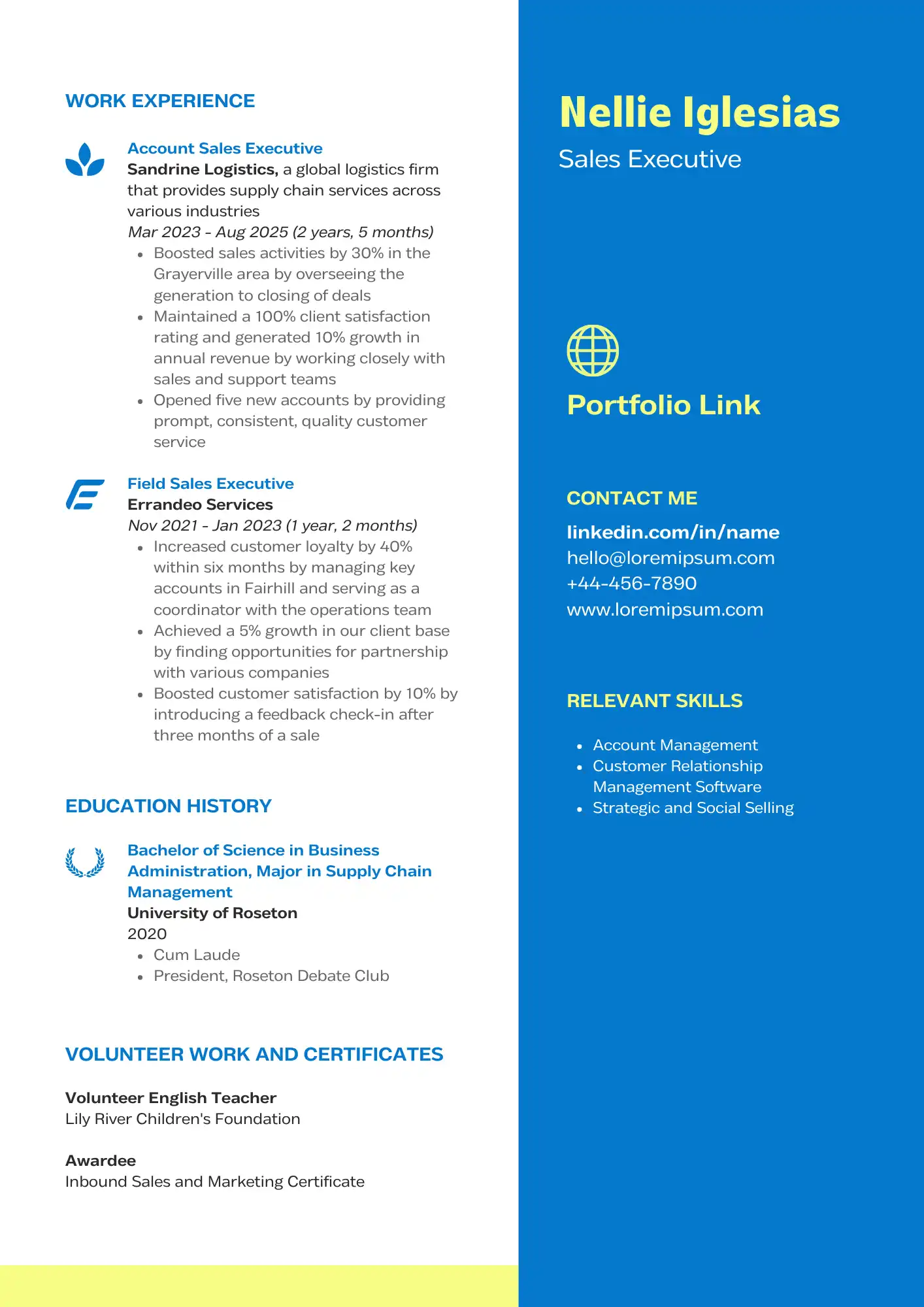
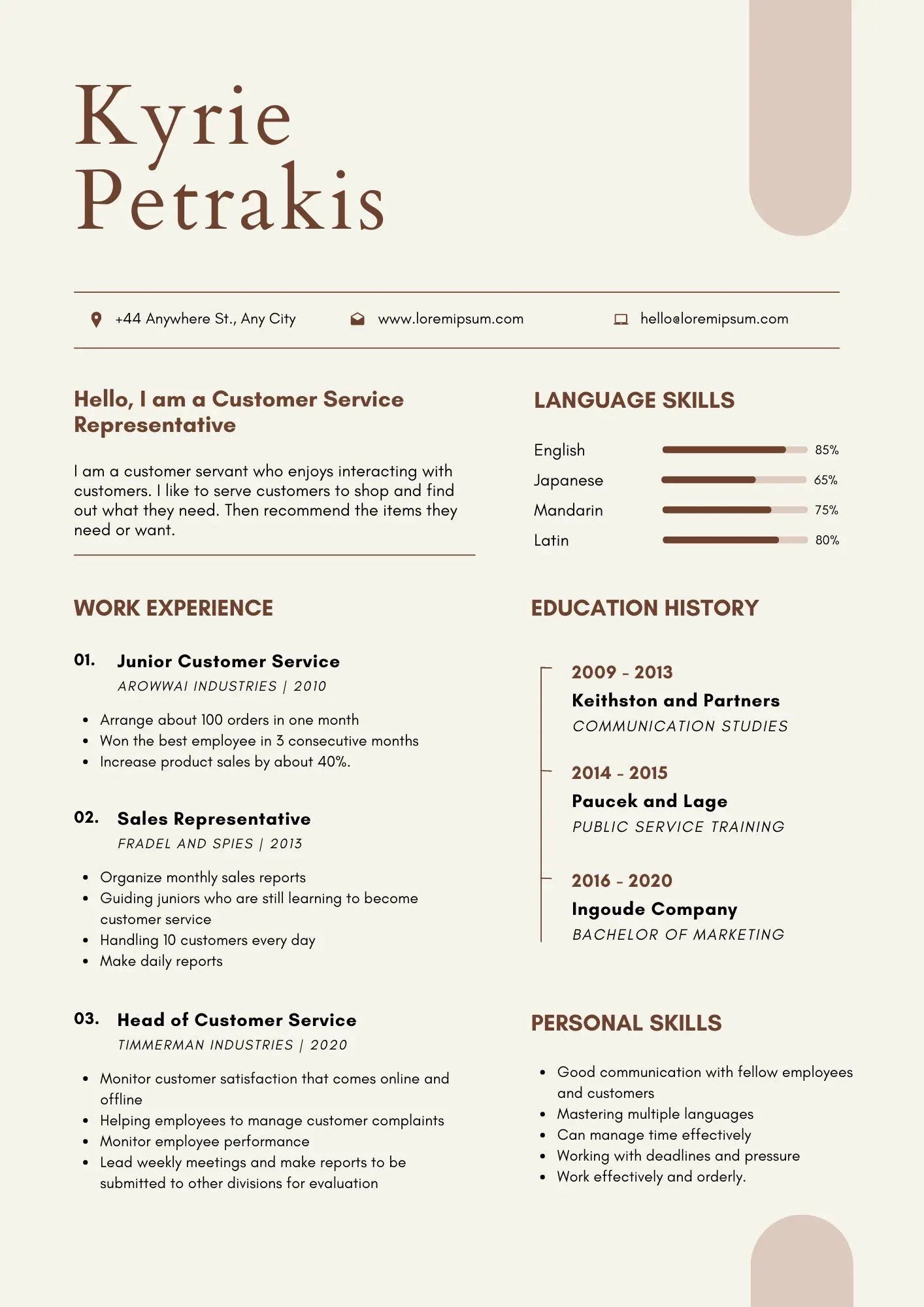
Looking for a CV template UK for your career stage? Below are some samples:


How to Make Your UK CV ATS-Friendly?
Most large employers in the UK market use Applicant Tracking Systems (ATS) to filter candidates. In a CV format UK, the ATS-friendly CV format UK guarantees that your data is read correctly without mistakes. To write your CV for these systems, you must use the right format with clear headings and standard fonts.
Focus on a CV that highlights industry-specific keywords found in the job advert. A Professional CV format for UK jobs should be simple; avoid complex graphics or tables that confuse the software.
Additional Tips:
- Use standard headings like “Work Experience” and “Education,” so the system can categorise your data.
- Mirror the language used in the job description to rank higher in search results.
- Avoid placing important information in the page header or footer, as some systems skip these areas.
Let iCover’s professional career services help you build a high-performing, tech-ready CV today.
Common UK CV Formatting Mistakes to Avoid
Approximately 75% of CVs are filtered out by Applicant Tracking Systems (ATS) before they are ever reviewed by a human recruiter (Jobscan). The reason for this high rejection rate is often due to poor formatting, where the software is unable to correctly extract the candidate’s information.
Therefore, to help your CV pass the initial review, you must avoid errors that signal a lack of attention to detail.
First of all, sending a generic cvs is a major mistake. Also, failing to tailor your CV to the job description signals a lack of effort.
Remember that many applicants, especially international candidates, fail to understand the US resume vs CV for the UK CV.
Apart from these, be honest and explain any gaps in your CV to maintain professional integrity. Recruiters want to see a perfect match for the job, so remove irrelevant old roles or hobbies that add no value. Other mistakes to avoid are:
- Spelling Errors: Always use UK English (e.g., ‘Organise’ not ‘Organize’).
- Unprofessional Emails: Use a simple name-based email address.
- Vague Duties: Focus on what you achieved, not just what you were told to do.
- File Naming: Do not save your file as “Draft123.pdf.” Use “Firstname-Surname-CV.pdf.”
Need a final check? Use our professional CV editing services to ensure a flawless application.
Conclusion
Landing an interview starts with a high-quality CV format UK sample that reflects your professional value. By sticking to the two-page rule, using a clean layout, and removing unnecessary personal data, you meet the exact expectations of British hiring managers. Remember to quantify your achievements and keep your formatting consistent. For a CV that truly stands out, let the experts at iCover craft your perfect professional story.
Frequently Asked Questions about UK CV Format
How should I handle a career gap on my CV?
Briefly mention the reason with dates, such as “Career Break for Travel” or “Full-time Parenting.” This maintains transparency without requiring a long explanation.
Should I include hobbies and interests?
Only include them if they demonstrate relevant soft skills. For example, “Marathon Running” is a display of discipline while “Watching TV” is not.
Is a skill-based CV better than a chronological one?
Typically, no, UK recruiters favour the chronological format. If you’re going through a major transition, only use a functional (skill-based) layout if it’s appropriate.
Is it necessary to include a cover letter?
Yes. In the UK, a tailored cover letter is considered essential unless the job advert specifically states otherwise.
Should I list my salary expectations?
No. Never include salary details on a UK CV. These discussions should only happen during the interview or offer stage.
What is the best way to list a temporary or contract role?
Organise them well within the work history. Use the term “Contractor” or “Temporary Assignment” next to the job title to explain the short duration.
How useful was this post?
Click on a star to rate it!
Average rating / 5. Vote count:
No votes so far! Be the first to rate this post.
We are sorry that this post was not useful for you!
Let us improve this post!
Tell us how we can improve this post?

Want To See My Profile — Click Here Peter
- Values Based Recruitment: What It Is and How to Prepare as a Candidate - August 19, 2026
- Compassionate Leave UK – Know Your Employment Rights - July 31, 2026
- Highest Paying Jobs in the UK — and How to Land Them - July 11, 2026
